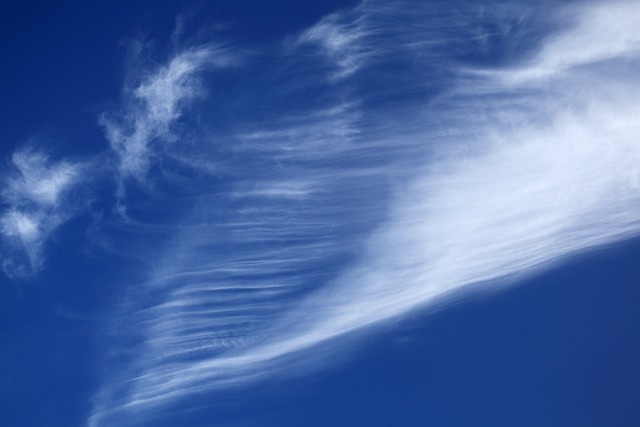
Clouds, formed by water vapor rising from oceans, lakes, and rivers, are crucial components of weather naturally. Humidity and air temperature drive condensation, leading to diverse cloud types with distinct visual characteristics. Front boundaries between air masses stimulate cloud growth and precipitation. Meteorologists use cloud patterns and sophisticated models to predict weather changes, impacting global climate through atmospheric moisture levels and circulation patterns. Understanding cloud dynamics, including the impact of carbon dioxide, enhances forecasting accuracy. Cloud cover significantly influences evaporation rates, sunlight penetration, and regional climate patterns over time, aiding communities in safety planning. Advanced analysis of cloud behavior improves severe weather prediction, fostering resilience in a changing climate.
Clouds, those ubiquitous wisps and sheets in our sky, are more than mere visual spectacles. They play a pivotal role in shaping our weather naturally, influencing temperature, precipitation, and atmospheric stability. Understanding how clouds form and interact is crucial for predicting and managing the dynamic nature of our climate. This article delves into the science behind cloud formation, exploring the intricate processes that transform water vapor into condensed clouds, and examining their profound impact on local and global weather patterns. By unraveling this meteorological enigma, we gain valuable insights into the complex interplay between clouds and the Earth’s atmospheric systems.
- Evaporation and Humidity: The Initial Steps in Cloud Formation
- Cooling and Condensation: When Water Vapor Becomes Visible
- Cloud Types and Their Impact on Weather Patterns
- Observing Clouds: Predicting and Understanding Weather Changes
Evaporation and Humidity: The Initial Steps in Cloud Formation

Clouds, those fluffy white specks floating in the sky, are more than just pretty sights. They are a visible sign of intricate processes that influence our weather patterns naturally. The story begins with evaporation and humidity—the initial steps in cloud formation that set the stage for what’s to come. Sunlight heats the Earth’s surface, causing water from oceans, lakes, and rivers to evaporate into vapor. This invisible moisture rises into the atmosphere, where it cools and condenses around tiny particles like dust or salt. These microscopic droplets gather together, forming clouds.
Humidity plays a pivotal role here. It’s the measure of water vapor in the air. When humidity levels rise, so does the potential for cloud formation. Warm air can hold more moisture than cold air; as warm air rises and cools, it reaches its saturation point, and condensation occurs, leading to cloud development. This process is particularly evident at front boundaries, where warm and cold air masses meet, creating instabilities that encourage cloud growth and often result in rainfall accumulation. Meteorological data collection from these fronts provides valuable insights into atmospheric conditions and their impact on weather patterns.
Fronts, like the cold front and warm front, act as catalysts for cloud behavior. Cold fronts, for instance, push warm air upward, causing it to cool and form clouds quickly. This rapid ascent can lead to dramatic cloud formations and severe weather events. Conversely, warm fronts allow cooler air to slide beneath warmer air, creating a less abrupt but still significant cloud and precipitation system. By studying these interactions, meteorologists can predict rainfall patterns and track the movement of storms, enhancing our ability to understand and prepare for changing weather naturally.
Consider the example of volcanic activity, which can significantly impact local microclimates. Eruptions release vast amounts of water vapor into the atmosphere, leading to increased humidity and potential cloud formation. This phenomenon was observed during the 1980 eruption of Mount St. Helens, where cloud cover and rainfall patterns changed dramatically in the surrounding area. Visiting us at [Brand/Organization] allows you to delve deeper into these topics, explore real-world data, and gain actionable insights into how clouds, humidity, and fronts contribute to the ever-changing weather we experience naturally.
Cooling and Condensation: When Water Vapor Becomes Visible

Clouds are a fundamental aspect of our weather naturally, playing a crucial role in shaping atmospheric conditions. The process of cloud formation begins with the rise of warm air, which causes water vapor to cool and condense around microscopic particles known as condensation nuclei. As the air ascends, its pressure decreases, leading to further cooling. This cooling effect is particularly significant at high altitudes where the atmosphere is thinner. When the temperature falls below the dew point—the temperature at which air becomes saturated and can no longer hold all its water vapor—condensation occurs. This results in the formation of tiny water droplets or ice crystals, depending on the altitude and temperature, which gather around the condensation nuclei.
The visible manifestation of this process is the formation of clouds. They act as a cooling mechanism, reflecting sunlight back into space and reducing the Earth’s surface temperature. The type of cloud formed depends on various factors, including air temperature and humidity. For instance, cumulus clouds indicate unstable atmospheric conditions and are often associated with fair weather, while nimbostratus clouds signal a continuous rainfall system. Meteorologists use these visual cues along with sophisticated wind gust calculations and data from weather forecasting models to predict and track weather patterns.
In the broader context of meteorology basics, understanding the role of carbon dioxide in weather is also crucial. While CO2 is not directly involved in cloud formation, it influences global temperature trends, which, in turn, impact atmospheric moisture levels and circulation patterns. This complex interplay affects cloud coverage and intensity over time. By studying these dynamics, experts can refine weather forecasting models to reduce errors and provide more accurate predictions. To stay informed on the latest insights, find us at meteorology basics where we delve deeper into these captivating atmospheric phenomena.
Cloud Types and Their Impact on Weather Patterns
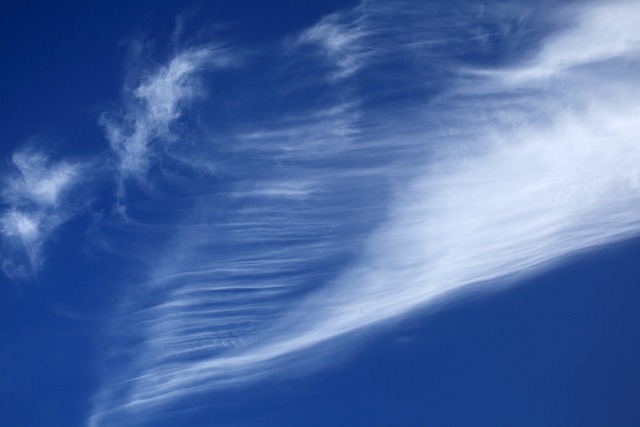
Clouds play a pivotal role in shaping our weather patterns, acting as a dynamic element in Earth’s complex climate system. Different cloud types, classified by their altitude, structure, and water content, exhibit distinct characteristics that influence local and global weather naturally. Understanding these clouds and their interactions is crucial for forecasting accurate weather conditions, especially as we navigate ever-changing environmental scenarios, from droughts to extreme temperature events.
One of the most familiar cloud types, cumulus clouds, resemble fluffy cotton balls and typically form at low to middle altitudes. These clouds are often associated with fair weather, but they can also indicate potential for development into more intense systems. As warm, moist air rises and cools, water vapor condenses, forming these visible masses. Cumulus clouds’ impact on weather is multifaceted; they can reflect sunlight, influencing surface temperatures, and their presence or absence may signal the approach of a warm front or storm system. For instance, a sudden increase in cumulus cloud cover could indicate an impending change from calm, sunny conditions to a thunderstorm outbreak.
In contrast, stratus clouds are uniform, low-level layers that often blanket the sky, creating what is colloquially known as ‘overcast’ conditions. These clouds have a significant effect on temperature and light penetration. Stratus clouds can trap heat near the surface, leading to higher humidity and potentially intensifying drought conditions. Conversely, they also reduce sunlight intensity, which can impact agriculture and energy production. Sunrise and sunset calculations reveal how stratus cloud cover influences our perception of day-night transitions, sometimes blurring these boundaries during prolonged periods.
Jet streams 101 involves understanding high-altitude currents of fast-moving air that steer storms and temperature fronts. They are integral to global weather patterns, with two primary jet streams around the globe. These streams can be influenced by various factors, including ocean temperatures and cloud cover impacts evaporation processes. For instance, changes in jet stream intensity and position have been linked to more severe weather events, such as prolonged heatwaves or intense rainfall. As we navigate today’s changing climate, studying these dynamic atmospheric phenomena becomes increasingly vital for accurate long-range weather forecasting.
Observing Clouds: Predicting and Understanding Weather Changes

Clouds, often seen as mere textures on a blue canvas above, play an intricate role in shaping our weather patterns. The process of cloud formation is a delicate dance between atmospheric conditions and moisture levels. As air rises due to convection or frontal boundaries, it cools, reaching its dew point—the temperature at which air becomes saturated and water vapor condenses into tiny liquid droplets or ice crystals, forming clouds. This simple yet profound transformation serves as our first clue when predicting weather changes.
Observing cloud types and their characteristics can offer valuable insights into the atmosphere’s current state and imminent shifts in weather. For instance, cumulus clouds, with their fluffy textures, often indicate fair weather, while towering cumulonimbus clouds signal potential thunderstorms. As these clouds grow vertical, they can produce intense rainfall, hail, and even tornadoes. Meteorologists closely monitor cloud movements and formations to calculate wind gust speeds, a crucial factor in weather forecasting accuracy. By integrating barometric pressure readings and satellite imagery with ground-based sensors, forecasters enhance their ability to predict tropical cyclones and other severe weather events.
Cloud cover also significantly impacts evaporation processes, which are fundamental to global water cycles. The amount of sunlight reaching the Earth’s surface varies based on cloud patterns, affecting evaporation rates and, consequently, precipitation distribution. This is where cloud cover becomes a vital tool for understanding long-term weather trends. For example, prolonged heavy cloud cover can lead to increased moisture retention, influencing regional climate patterns. By studying these connections, scientists and meteorologists can better predict and prepare for weather shifts, ensuring communities are equipped with accurate information for safety and planning. This holistic approach to weather forecasting leverages the power of observation, data integration, and our ever-growing understanding of cloud dynamics.
In the realm of weather prediction, finding us at cloud cover impacts evaporation processes offers a practical application of this knowledge. As our ability to analyze and interpret cloud behavior advances, so does our potential to minimize the impact of severe weather events through improved forecasting accuracy. By harnessing these insights, we can enhance our resilience and adaptability in the face of an ever-changing climate.
Clouds, formed through a meticulous dance of evaporation, humidity, cooling, and condensation, are not merely celestial spectacles but powerful influencers of our planet’s weather. Understanding this process offers profound insights into nature’s intricate systems. By observing cloud types and their behavior, meteorologists can predict weather patterns, enabling better preparation and response to natural phenomena. This article has taken readers on a journey through the initial stages of cloud formation, highlighting the role of humidity and evaporation. It has also explored diverse cloud types and their impact on local climates, emphasizing the dynamic relationship between clouds and weather. With this knowledge, individuals can now appreciate the sky’s beauty as a reliable indicator of atmospheric changes, naturally enhancing our connection to and understanding of Earth’s complex weather systems.