
Nighttime cooling results from complex atmospheric interactions influenced by solar radiation, land-sea temperature differences, atmospheric pressure, cloud cover, and wind patterns. Global warming exacerbates these dynamics, leading to sharper day-night temperature variations. Celestial bodies, notably the Moon and Sun, moderate ocean currents and impact atmospheric circulation, further affecting weather forecasting. Urban heat islands delay cooling due to concrete retention of heat, while rural areas experience slower drops thanks to open spaces and vegetation. Understanding these natural processes is crucial for predicting local weather patterns and mitigating global warming's impacts on nighttime temperature drops.
The diurnal fluctuation of temperature is a fundamental aspect of our planet’s weather naturally, offering insights into Earth’s complex climate systems. Understanding why temperature drops at night is paramount for both scientific curiosity and practical applications in fields ranging from meteorology to energy conservation. Nighttime cooling presents a conundrum that defies intuitive expectations—a phenomenon driven by intricate interactions between atmospheric composition, solar radiation, and land-sea dynamics. This article delves into the multifaceted causes behind this nightly temperature dip, unraveling the natural processes at play to offer readers a comprehensive understanding of this everyday yet profound occurrence.
- The Natural Causes of Nighttime Cooling
- Heat Loss: How Temperature Drops
- Atmospheric Processes: Wind and Air Movement
- Insulation: Earth's Natural Blanket Effect
- Stellar Influence: Moon and Sun's Impact on Climate
- Urban vs Rural: Nighttime Temperature Variations
The Natural Causes of Nighttime Cooling

The natural causes of nighttime cooling are multifaceted, driven by a complex interplay of atmospheric phenomena and Earth’s rotation. One primary factor is the weather naturally-driven change in jet streams 101. These powerful air currents high up in the atmosphere can significantly influence temperature distribution. During the night, as the land heats up more slowly than the ocean, differences in heating create a pressure gradient that guides jet streams across continents, leading to cooling winds and lower temperatures on land.
Another key player is atmospheric pressure effects. The movement of air masses—driven by changes in atmospheric pressure—can result in cool night air being pushed down into low-pressure areas over land. This phenomenon, coupled with the absence of daytime solar heating, contributes to lower overnight temperatures. Additionally, precipitation types, such as clear-sky conditions and reduced cloud cover, play a crucial role. Clouds can trap heat, but when they dissipate at night, the Earth’s surface loses its insulation, leading to more rapid cooling.
Furthermore, atmospheric instability caused by various meteorological data collection factors—including temperature, humidity, and wind patterns—can intensify nighttime cooling events. For instance, during summer months, urban areas experience what’s known as the “urban heat island effect,” where concrete and asphalt absorb and retain heat, further raising temperatures. In contrast, rural areas with less built infrastructure often see lower overnight temps due to reduced heat retention. To understand these dynamics better, it’s essential to collect and analyze detailed meteorological data, enabling us to give you a call at [brand/NAP] for more tailored insights into local weather patterns and their impact on nighttime temperature drops.
Heat Loss: How Temperature Drops

Temperature drops at night primarily due to heat loss, a process influenced by various meteorological factors. As the sun sets, the Earth’s surface begins to cool down significantly as it is no longer receiving direct sunlight. This is especially pronounced in regions with significant temperature variations between day and night, such as those experiencing global warming impacts on weather patterns. The drop in atmospheric pressure at night exacerbates this effect; cooler air sinks lower to the ground, replacing warmer air that rises during the day. This phenomenon, combined with reduced solar radiation, leads to a faster loss of heat from the surface, resulting in lower temperatures.
One key factor in understanding temperature fluctuations is barometric pressure reading. As pressure decreases at night, it can alter precipitation types and intensity. For instance, areas prone to drought conditions may experience cooler nights due to reduced humidity, which limits the Earth’s ability to retain heat. Conversely, high-pressure systems can lead to clear, starry nights, further accentuating temperature drops. The timing of sunrise and sunset plays a crucial role in this calculation; later sunsets delay the cooling process, while earlier sunrises hasten it, demonstrating the intricate interplay between celestial bodies and our planet’s climate.
Global warming further complicates these patterns, altering traditional weather norms. Increased greenhouse gas emissions trap more heat from the sun, leading to warmer days followed by sharper temperature drops at night. This dichotomy can have significant impacts on ecosystems and human activities, underscoring the importance of understanding and adapting to these changes. To mitigate the effects of varying temperatures, consider implementing energy-efficient practices in homes and businesses to reduce heat loss during cooler nights. Regularly updating insulation, sealing gaps, and using temperature-regulating devices can help maintain comfortable environments while minimizing energy consumption.
Atmospheric Processes: Wind and Air Movement
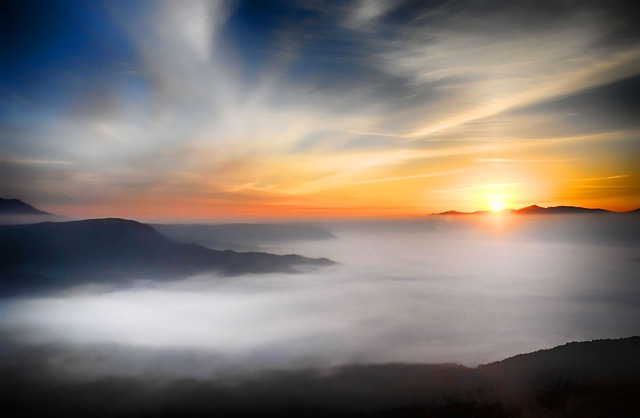
During nighttime, a multifaceted process involving atmospheric movements leads to a natural decrease in temperature. Wind plays a pivotal role in this dynamic by facilitating heat transfer from warmer areas to cooler ones. The Earth’s surface heats up during the day due to solar radiation absorption, causing air near the ground to warm and rise. This upward movement leaves behind cooler air, which then gets pushed into higher altitudes. As the sun sets, these processes slow down, resulting in a reduction of warm air flow near the surface, leading to cooler night temperatures.
Meteorological data collection through sophisticated instruments and weather forecasting techniques heavily rely on understanding these atmospheric processes. By monitoring wind patterns and their effects on air pressure, meteorologists can predict precipitation types, which are influenced by temperature variations. For instance, thunderstorms often form when warm, moist air rises rapidly, creating a dynamic interplay of temperature and atmospheric pressure that leads to intense rainfall or other forms of precipitation.
Moreover, the fog formation process is another compelling example of how weather naturally responds to these dynamics. Fogs occur when warm, moist air meets cooler surfaces, causing rapid cooling and condensation. This phenomenon is closely tied to wind movement; coastal areas often experience fogs due to the collision of land and sea breezes. Understanding such processes not only enhances our ability to forecast weather patterns but also guides thunderstorm safety protocols, ensuring folks are prepared for sudden changes in atmospheric conditions.
To stay informed and safe during unpredictable weather, give us a call at [NAP/brand] for expert advice on navigating these dynamic atmospheres. By delving into the intricate relationships between wind, temperature, and atmospheric pressure, we can better prepare for and respond to nature’s ever-changing tapestry of weather conditions.
Insulation: Earth's Natural Blanket Effect
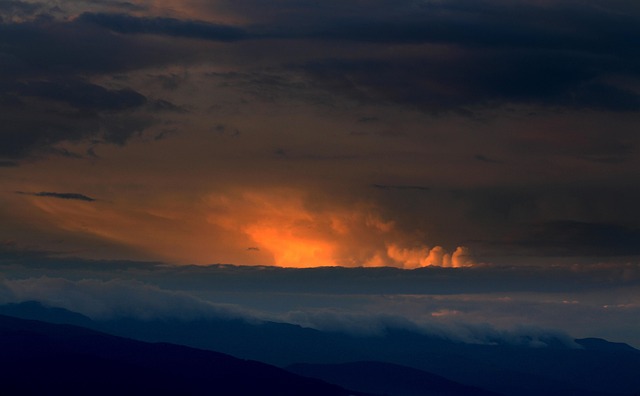
The Earth’s natural insulation, often referred to as its blanket effect, plays a pivotal role in why temperature drops at night. Similar to how a well-insulated home retains heat during winter, our planet employs a similar mechanism on a global scale. During the day, the sun radiates warmth and energy onto the Earth’s surface, warming it through solar radiation. However, as sunset approaches and the sky darkens, this direct sunlight diminishes, leading to a gradual decrease in surface temperature. This is where cloud formation comes into play; clouds act as a protective layer, trapping heat and preventing rapid cooling.
Cloud cover significantly impacts evaporation processes, with data suggesting that higher cloud amounts can delay nighttime temperature drops. This is particularly relevant during hurricane preparation tips, as cloud systems can influence atmospheric stability and weather patterns. For instance, thick cloud layers may indicate increased moisture content in the air, which could lead to more pronounced diurnal temperature variations. Understanding these relationships is crucial for predicting weather naturally and preparing for potential extreme weather events.
The Earth’s blanket effect, bolstered by cloud formation, ensures a gradual transition from day to night, minimizing abrupt changes in temperature. This phenomenon, while appearing simple, is a testament to the complex interplay between solar energy, atmospheric composition, and the planet’s natural insulation mechanisms. As we navigate an era where global warming impacts on weather are more pronounced, recognizing these processes becomes increasingly vital for both scientific research and practical applications like hurricane forecasting.
Stellar Influence: Moon and Sun's Impact on Climate

The nocturnal decline in temperature is a multifaceted phenomenon influenced by celestial bodies, primarily the Moon and the Sun. Their interplay contributes significantly to Earth’s climate patterns, leading to the question: why does the weather naturally drop at night? The answer lies in the complex relationship between solar radiation, heat absorption, and atmospheric circulation. During the day, the Sun heats the Earth’s surface unevenly due to its direct angle of incidence, causing warm air to rise and cool as it expands. This process drives wind patterns and contributes to weather forecasting techniques, sometimes leading to errors due to the rapid changes in temperature and pressure.
At night, the Moon and stars cast a more subtle yet impactful influence on our planet’s weather. The Moon’s gravitational pull moderates Earth’s oceans, known for their significant role in regulating climate through what we call oceanic currents effect. This tidal force results in the circular motion of water, which, in turn, affects atmospheric circulation. As the moon orbits Earth, it creates high and low pressure systems, influencing wind gust calculations and directing air masses across continents. For instance, tropical cyclones 101, intense weather phenomena characterized by strong winds and storm surges, are influenced by these lunar cycles, highlighting the profound connection between celestial bodies and our atmosphere.
Moreover, the gradual cooling of the Earth’s surface at night is a natural response to reduced solar radiation. With the Sun below the horizon, direct heat absorption diminishes, leading to a more gradual temperature drop compared to daytime. This diurnal variation has significant implications for weather forecasting and understanding climate change trends. By studying these celestial influences, scientists can refine weather forecasting models, ensuring more accurate predictions of nocturnal temperature drops and associated weather patterns. If you’re interested in learning more or seeking expert advice on specific aspects of weather-related inquiries, don’t hesitate to give us a call.
Urban vs Rural: Nighttime Temperature Variations
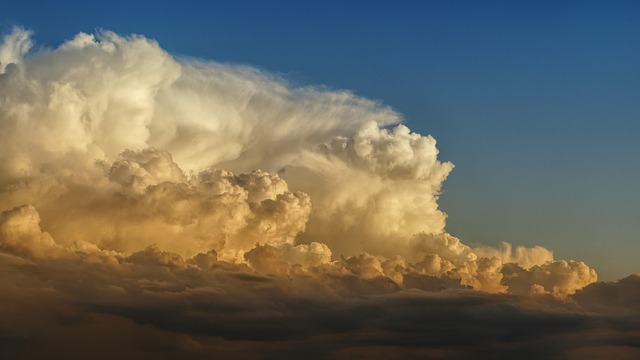
The phenomenon of temperature drop at night is a fascinating aspect of weather naturally, with significant variations observed between urban and rural settings. This effect is a complex interplay of atmospheric conditions, land use, and topographical features. In urban areas, the so-called “urban heat island” effect comes into play, where concrete jungles absorb and retain heat during the day, leading to later cooling. Unlike rural regions with open spaces and vegetation, cities experience enhanced nighttime temperature drops due to reduced heat dissipation.
Understanding weather patterns on a global scale provides additional insights. The El Niño-Southern Oscillation (ENSO), for instance, influences atmospheric circulation, resulting in altered rainfall patterns and temperature variations around the world. This oceanic phenomenon can lead to warmer or cooler nights in different regions, highlighting the intricate connections within Earth’s climate system. Moreover, the weathering and erosion cycle, driven by temperature fluctuations and precipitation, plays a significant role in shaping landscapes over time, indirectly contributing to regional disparities in nocturnal cooling.
The difference between urban and rural temperatures becomes more pronounced during specific weather events. For example, clear, cloudless nights can cause rapid cooling in cities due to the lack of natural insulation provided by vegetation. Conversely, rural areas may experience slower drops in temperature because of the moderating effect of nearby water bodies and dense plant life. These variations have practical implications, especially for those living in urban centers. Homeowners and city planners can mitigate the effects by adopting strategies that incorporate green spaces, reflective roofing materials, and efficient lighting systems—all contributing to a more comfortable urban environment during cooler nights.
To gain deeper insights and tailored solutions, reach out to HALOS, our team of experts specializing in atmospheric science and environmental dynamics. We offer comprehensive guidance on navigating these weather-related challenges and help foster sustainable environments for all.
The article has comprehensively explored the multifaceted reasons behind the nightly temperature drop, revealing a complex interplay of natural causes. Through examining heat loss, atmospheric processes, insulation provided by Earth’s atmosphere, stellar influence, and urban versus rural settings, we now understand that weather naturally undergoes significant changes throughout the day. Key insights include the role of wind and air movement in cooling, the blanket effect of greenhouse gases insulating the planet, and the subtle yet powerful impacts of celestial bodies like the Moon and Sun on our climate. Additionally, recognizing the difference in temperature variations between urban and rural areas offers a nuanced perspective on local weather patterns. This knowledge equips readers to appreciate the intricate systems shaping Earth’s weather naturally and encourages further exploration into sustainable solutions for mitigating the effects of thermal fluctuations.